Your Annual Performance Review: Show Up Prepared. Show Up Confident.
- Tip sheet
- Performance reviews
- GROWS model
Your annual performance review isn’t something that happens to you. It’s a conversation you can lead. Most people walk in underprepared and walk out wishing they’d said more — more about what they accomplished, more about where they’re headed, more about what they need. This tip sheet is here to change that. A great review isn’t about impressing anyone. It’s about showing up as your full professional self — ready, clear, and grounded in what you’ve done and where you want to go.
Before You Walk In the Door — The Preparation Mindset
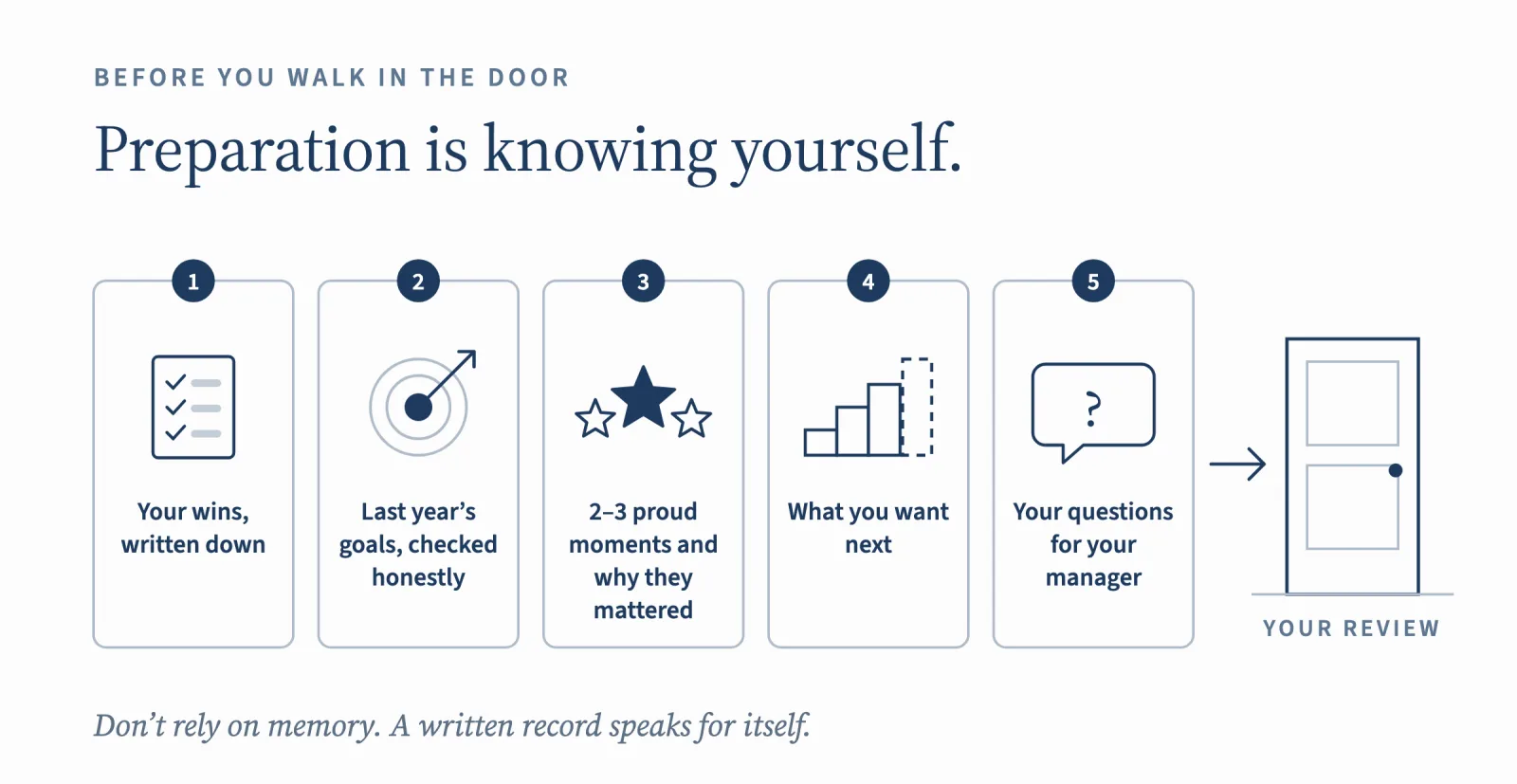
The work you do before the meeting matters as much as anything you say inside it. Preparation isn’t about scripting yourself. It’s more about knowing yourself. Here’s where to start:
- Gather your evidence. Wins, metrics, project outcomes, feedback you’ve received — collect it all. Don’t rely on memory. Memory is kind, but it’s also selective. A written record speaks for itself.
- Review your goals from last year and assess your own progress honestly — before your manager does. Self-awareness is a leadership quality. Use it.
- Write down 2–3 things you’re most proud of — and be ready to say why they mattered to the business. Not just what you did, but what it meant.
- Know what you want next. Growth, development, new responsibility, better balance — think it through before you walk in. You can’t ask clearly for something you haven’t named for yourself.
- Arrive with questions, not just answers. The best reviews are two-way conversations. What do you want to learn from your manager? Ask it.
Use the GROWS Model to Organize Your Thinking
The GROWS model is a five-step coaching framework I developed with my partner, Dr. Tim Ursiny. The model helps people navigate difficult conversations with curiosity, accountability, and purpose. In the context of a performance review, it’s not a script. It’s a framework you build and follow. Each letter invites you into a different quality of engagement. Work through them, and you’ll walk in not just prepared, but genuinely present.
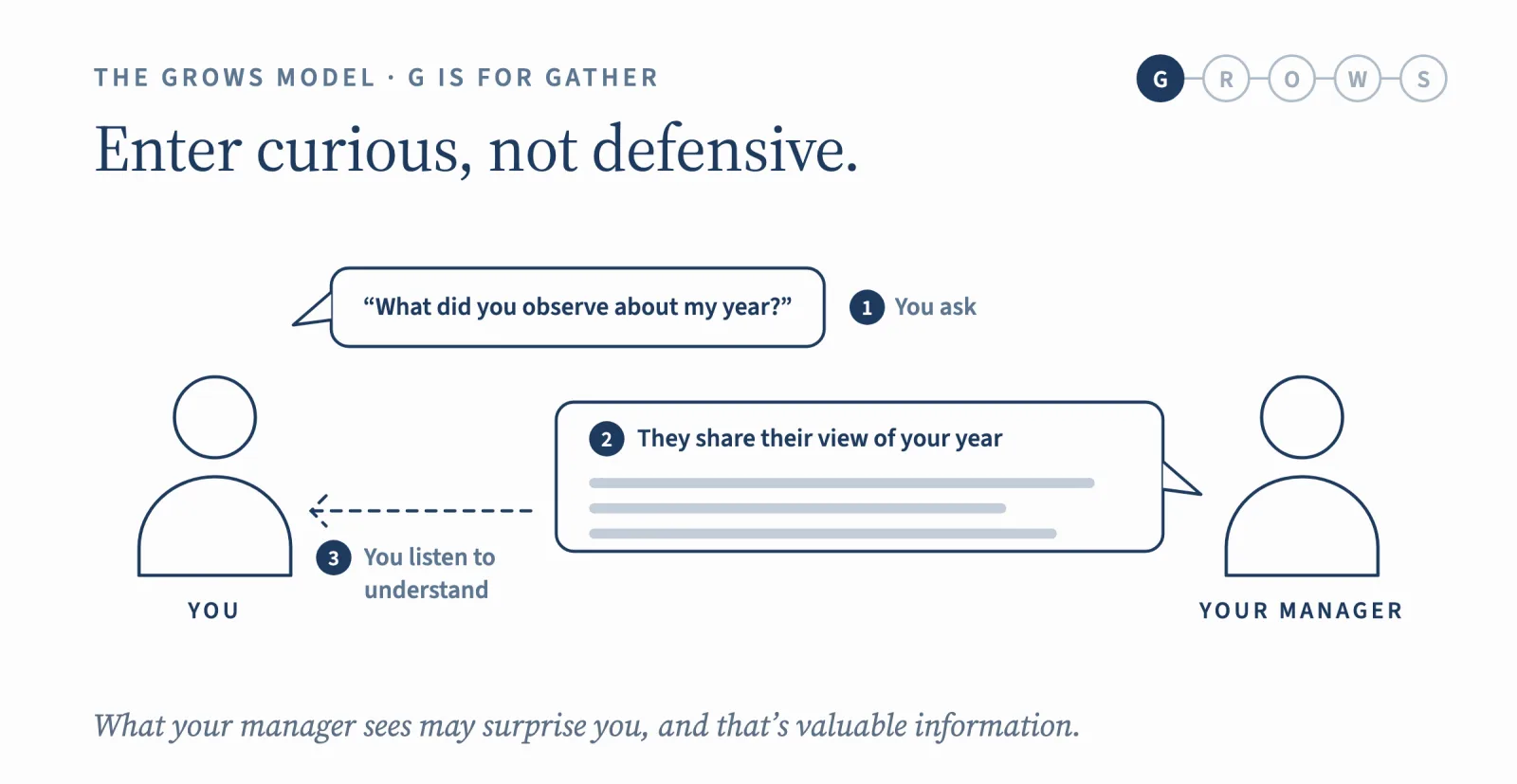
G — Gather
Use questions and listening skills to fully understand your manager’s perspective. Enter the meeting curious, not defensive. Ask what they observed about your year. Listen to understand — not just to respond. What your manager sees may surprise you, and that’s valuable information.
“What questions can you ask your manager that will help you truly understand their perspective on your performance?”
R — Reflect
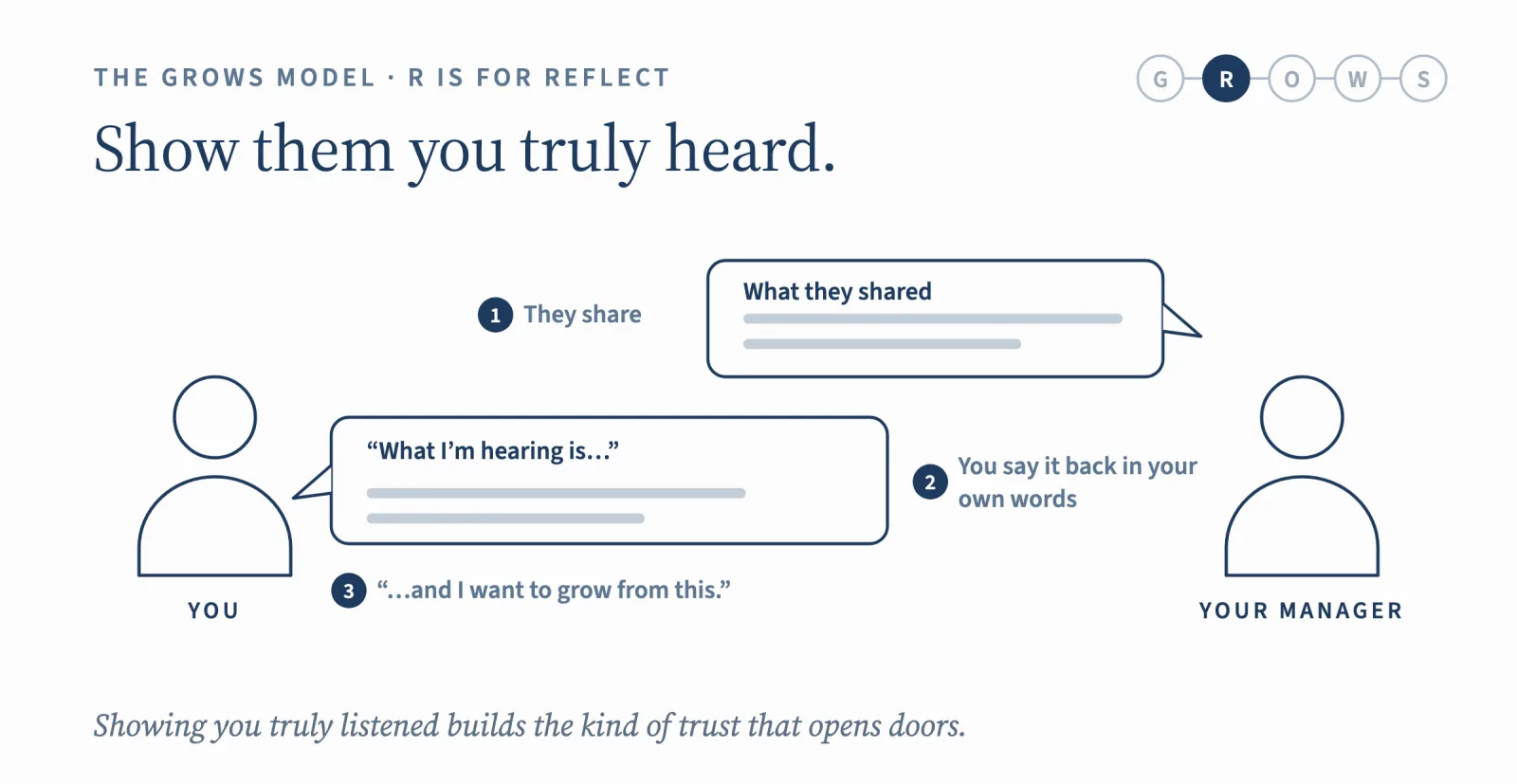
Reflect back and clarify — and verbalize your genuine desire to grow. Paraphrase what you hear. Signal that you are engaged and open. Showing your manager that you are truly listening, and that growth matters to you, builds the kind of trust that opens doors.
“Can you reflect back what your manager has shared in a way that shows you heard them — and that you want to move forward constructively?”
O — Own
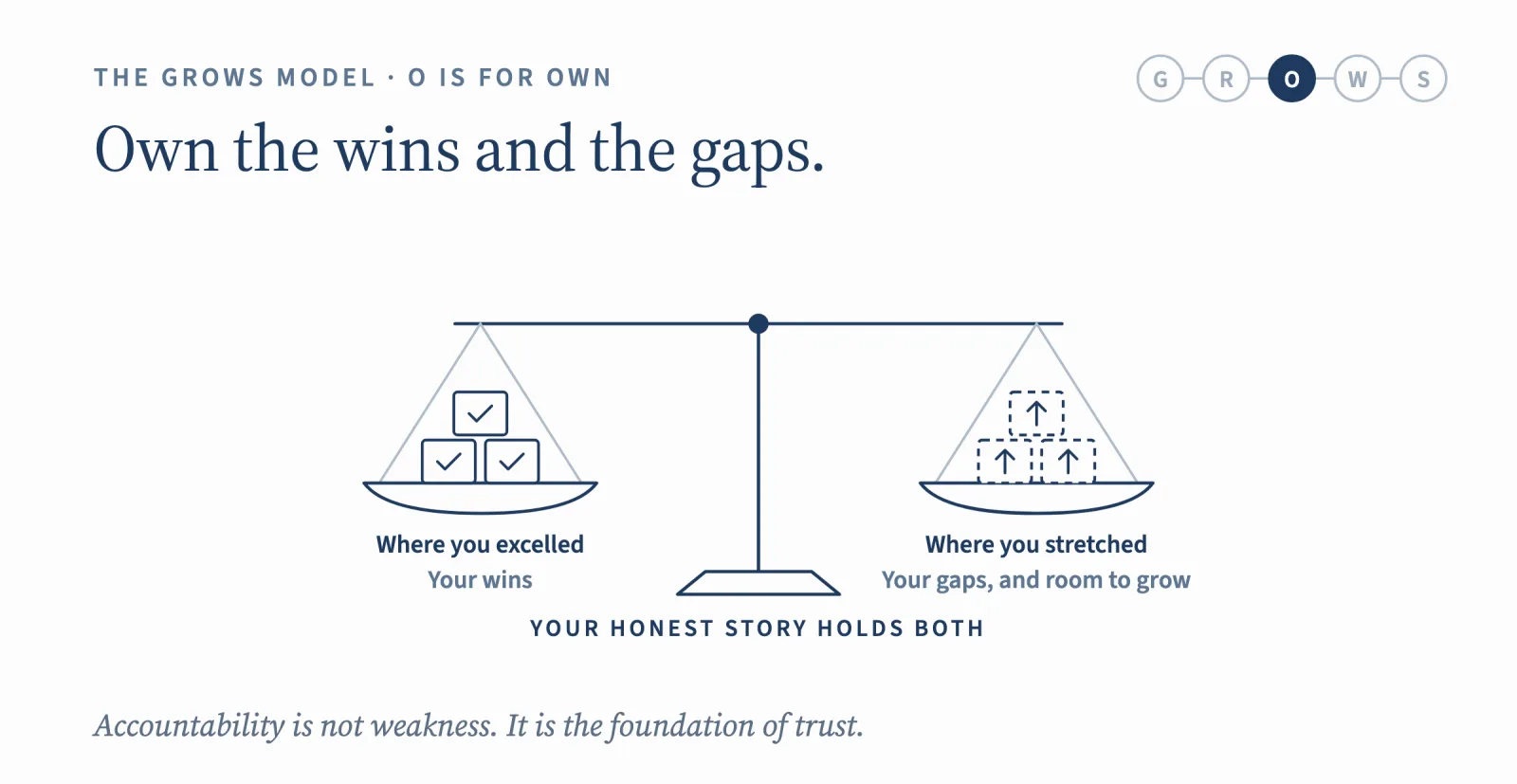
Be accountable for your contributions — including areas of development, not just success. Own your story fully. Name where you excelled and where you stretched. Accountability is not weakness. It is the foundation of trust, and trust is what makes the rest of this conversation possible.
“Describe your honest contribution to both the wins and the gaps in your past year.”
W — Want
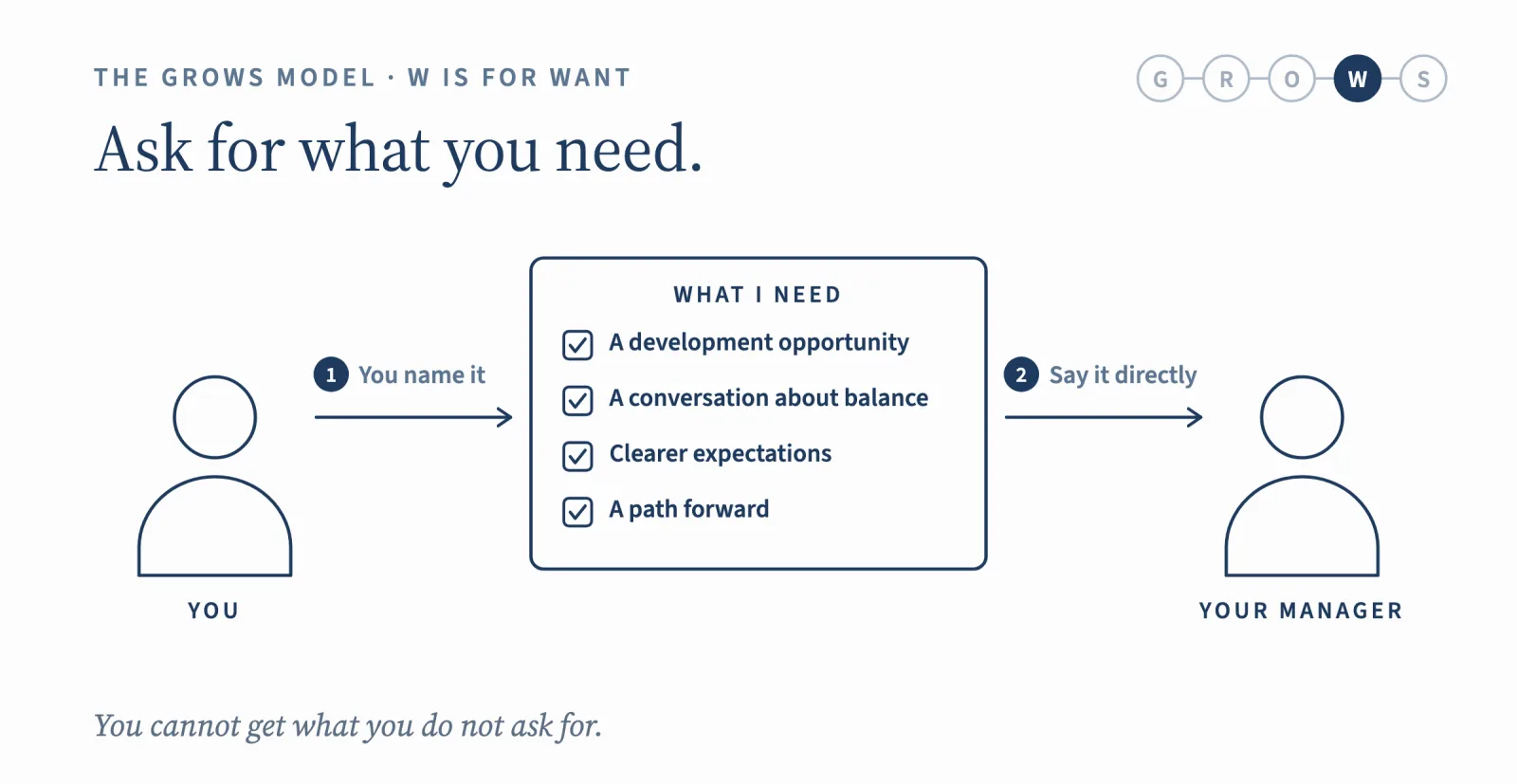
Let your manager know what you need. Be clear and direct about what you are asking for. May it be a development opportunity, a conversation about balance, a clearer set of expectations, a path forward? You cannot get what you do not ask for. Clarity is a gift you give to both of you.
“What do you need from your manager and your organization to do your best work in the year ahead?”
S — Strategize
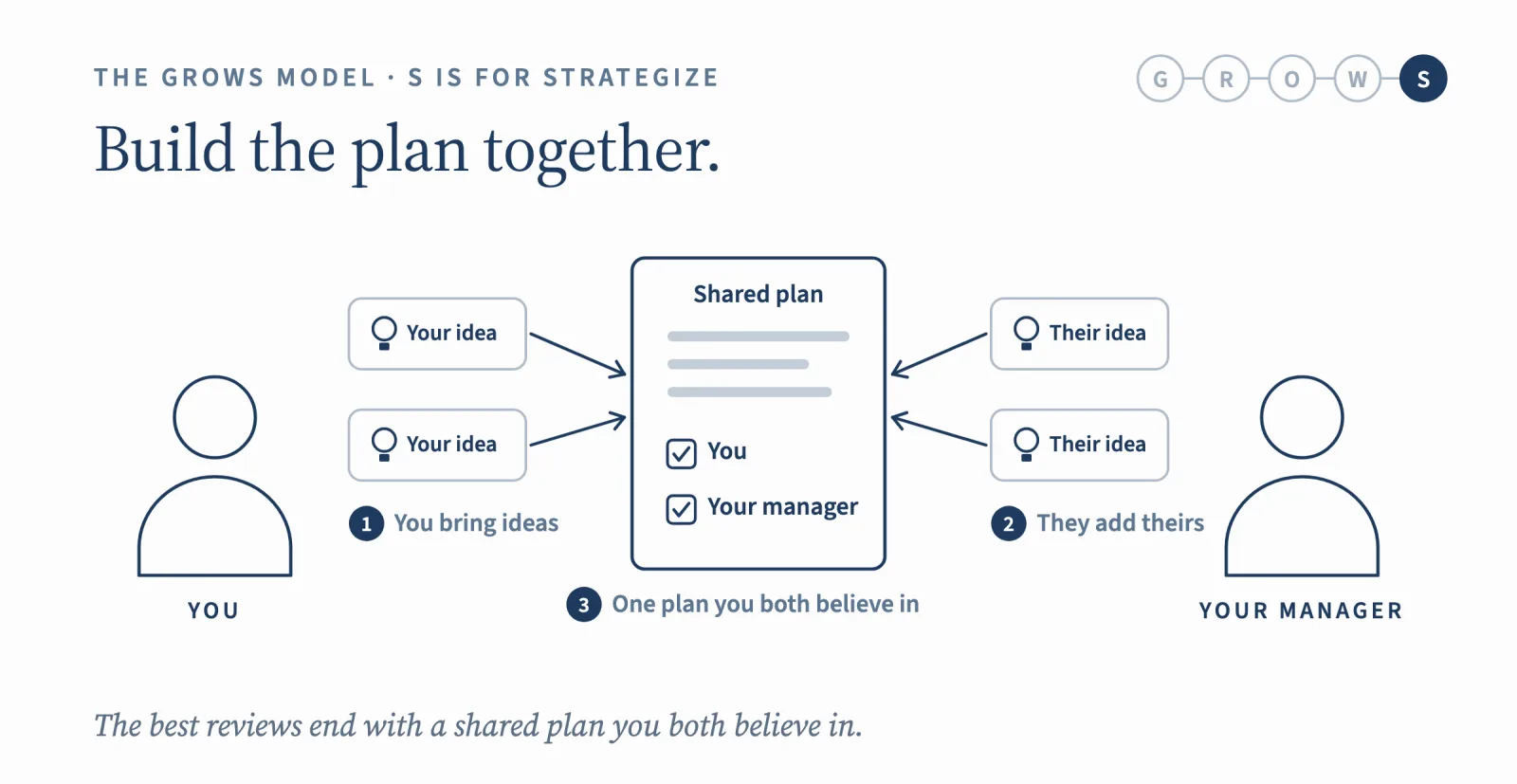
Brainstorm win-win solutions together. Don’t come in with a single demand — come in with ideas. Invite your manager into the solution. The best reviews end with a shared plan you both believe in, not a one-sided verdict that evaporates by Friday.
“What new approaches or ideas haven’t been tried yet — and how can you and your manager build a plan you both believe in?”
GROWS Model — Ursiny and Bolz, The Top Performer’s Guide to Conflict (2007, Sourcebooks)
Putting It Into Practice — A Real Conversation Example
Scenario
You want to raise the topic of work-life balance with your manager — without appearing less committed to your career or your organization.
This is one of the most common conversations people want to have — and one of the most avoided. Here’s how the GROWS model helps you walk in ready.
Gather: Start by asking your manager what they see. You might say: “I’d love to hear your perspective on how I’ve been managing my workload this year.” Let them talk. Listen without interrupting. What they observe — even if it’s incomplete — is your starting point, not your verdict. Go into the meeting with your curiosity senses high.
Reflect: Paraphrase what you heard before you respond. “What I’m hearing is that you’ve noticed I’ve been stretched — and that the quality of my work is still strong, but you’re wondering if it’s sustainable.” That kind of reflection signals maturity. It shows your manager you’re engaged, not defensive — and that you’re serious about growing.
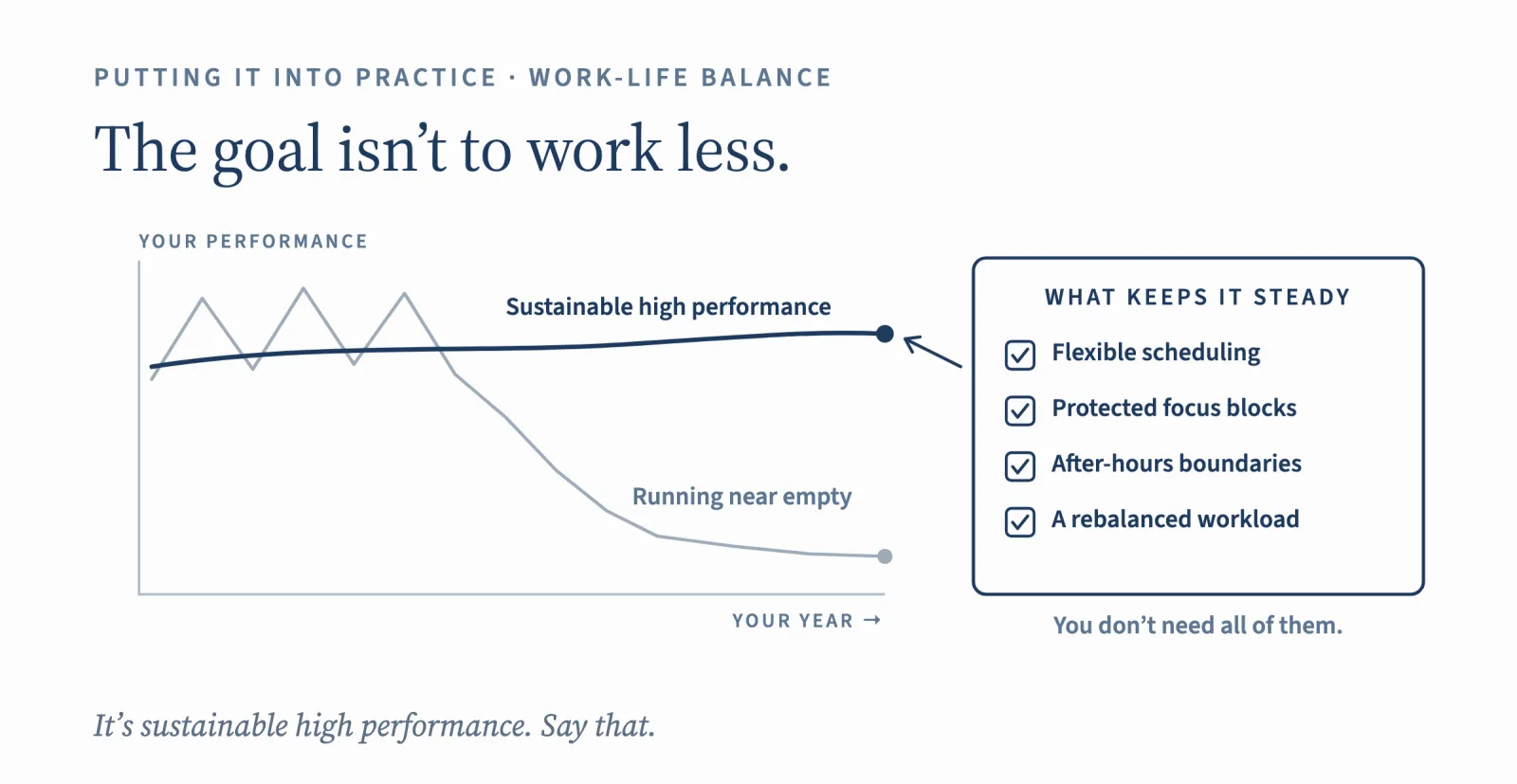
Own: Name your track record honestly — and name the reality. You have delivered. You are committed. You are also running near empty, and that affects the longevity of your best work. Own both sides of that story. Accountability here isn’t an admission of failure. It’s the move that makes everything else in this conversation credible.
Want: Be clear and direct about what you’re asking for. Your goal isn’t to work less — it’s sustainable high performance. Say that. Then name what you need: flexible scheduling, protected focus blocks, clearer boundaries around after-hours communication, a rebalancing of workload. You don’t need all of them. You need to name them so the conversation can begin.
Strategize: Invite your manager into the solution. Come in with ideas, not a single demand. Be willing to experiment, to measure results, to adjust. That shift — from complaint to collaboration — changes the entire tone of the room. The goal is a shared plan you both believe in.
Here’s a sample opening line you could actually use:
“I want to talk about how I’m working, not just what I’m working on. I’ve been thinking about how to sustain the level of performance I’m proud of — and I’d love your perspective.”
Remember This
You have more power in this conversation than you think. Preparation is not anxiety management. It is professional respect for yourself and your manager. Walk in ready. Speak clearly. Listen well. And know that the goal is not a perfect review. The goal is a real conversation that moves you forward.
The most important career conversations happen between real people, not polished personas. Be real. Be ready. That’s enough.
“Your career is not a performance. It’s a journey. Show up for it.” — David Bolz, Outer Harbor Coaching
Download the Performance Review Tip Sheet (PDF) →
Want help getting ready for your own review? See the Professional development program →
Questions people ask
How do I prepare for my annual performance review?
Gather your evidence, review last year's goals honestly, write down two or three things you're most proud of and why they mattered, know what you want next, and arrive with questions, not just answers.
What is the GROWS model?
A five-step method for difficult conversations: Gather, Reflect, Own, Want, and Strategize. David Bolz developed it with Dr. Tim Ursiny for their book, The Top Performer's Guide to Conflict (Sourcebooks, 2007), and uses it in his coaching today.
How do I bring up work-life balance in my review without looking less committed?
Ask your manager what they see, reflect it back, and own both your track record and that you're running near empty. Then say the goal is sustainable high performance and name what would help, like flexible scheduling or protected focus blocks.
I want help preparing for my review. Can David work with me on it?
Yes. In the Professional development program, he helps you gather your results, write them up for the people who decide, and rehearse the conversation.
Newsletter
Want to receive these sooner?
Get David’s newsletter in your inbox the day it goes out.
No spam. Leave the list anytime.